Damascus vs Stainless Steel: Which Is Better for a Kitchen Knife?
Damascus steel is not automatically better than stainless steel, and the two are not always opposites. Many modern Damascus kitchen knives actually use stainless steel. If you are choosing between them, look beyond the pattern and compare the cutting steel, heat treatment, blade geometry, corrosion resistance, construction and maintenance.
Is Damascus steel better than stainless steel?
Not automatically. A high-quality Damascus knife can be an excellent cutter, but its pattern does not make it sharper or tougher by itself. A good stainless steel knife can perform just as well or better. For everyday cooking, stainless steel usually offers easier care. Damascus makes the most sense when you want strong knife performance plus the distinctive appearance and craftsmanship of patterned steel.
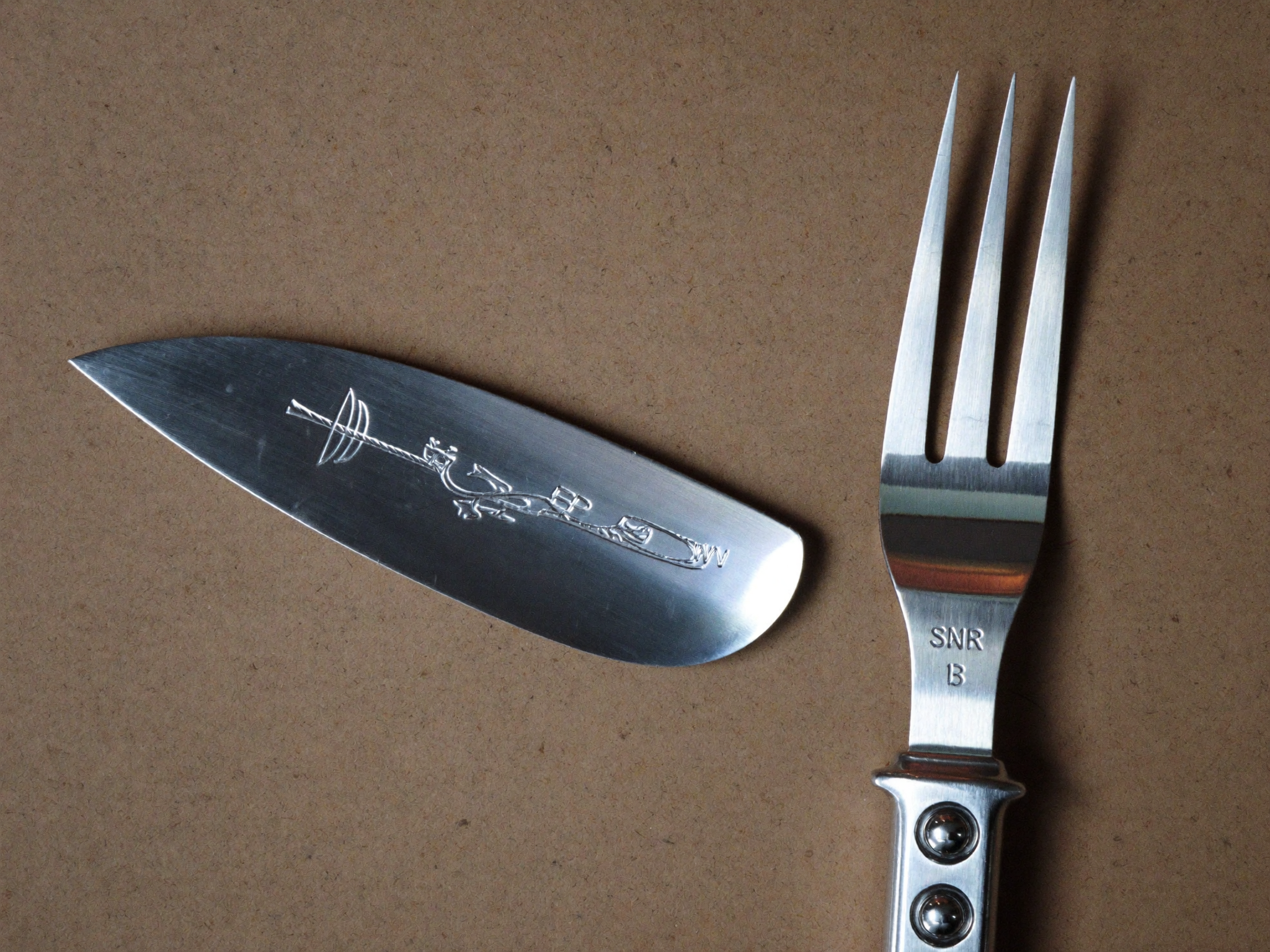
A Damascus knife can also be a stainless steel knife
The phrase "Damascus vs stainless steel" makes the choice sound simple. One knife is Damascus. The other is stainless. Pick a side.
Real kitchen knives are not quite that tidy.
Stainless steel refers to a broad group of steels designed to offer substantial resistance to corrosion. Damascus, as the term is commonly used for modern kitchen knives, usually refers to a layered or patterned construction.
Those descriptions can overlap.
A modern Damascus chef knife might have a stainless cutting core such as VG-10 or AUS-10 surrounded by patterned stainless cladding. Another Damascus blade might be made from forge-welded layers of two steels. A plain stainless chef knife might use one steel throughout the blade and display no visible pattern.
That is why buying a knife solely because the product title says "Damascus steel" can be misleading. You still need to know what the cutting edge is made from, how the blade was heat treated and whether the geometry suits the kind of cooking you do.
If you want the complete background first, read our guide to what a Damascus knife is. It explains the difference between modern pattern-welded steel, clad kitchen knives and the historical materials commonly associated with the Damascus name.
Damascus steel vs stainless steel knife comparison
| Feature | Damascus knife | Plain stainless knife |
|---|---|---|
| Sharpness | Can be extremely sharp, but the pattern itself does not create sharpness. | Can also be extremely sharp when properly ground and sharpened. |
| Edge retention | Depends mainly on the cutting steel, heat treatment, hardness and edge geometry. | Also depends on steel grade, heat treatment, hardness and geometry. |
| Corrosion resistance | Varies. Stainless Damascus can resist corrosion well, while reactive pattern-welded steels need more care. | Generally designed for good corrosion resistance, although stainless does not mean rust-proof. |
| Appearance | Major difference Distinctive flowing, layered or patterned finish. | Usually plain, brushed, polished, hammered or coated. |
| Maintenance | Depends on the alloys used. Reactive Damascus may need prompt drying and additional care. | Usually simpler for daily kitchen use. |
| Layer count | May describe construction and appearance, but does not measure sharpness or edge retention. | Usually irrelevant because monosteel knives are not marketed by layer count. |
| Price | Often higher because patterned construction and finishing can require additional work. | Available across a very wide price range, from inexpensive to premium. |
| Best reason to buy | You want a capable knife with the added visual character of patterned steel. | You want straightforward performance without paying specifically for decorative layering. |
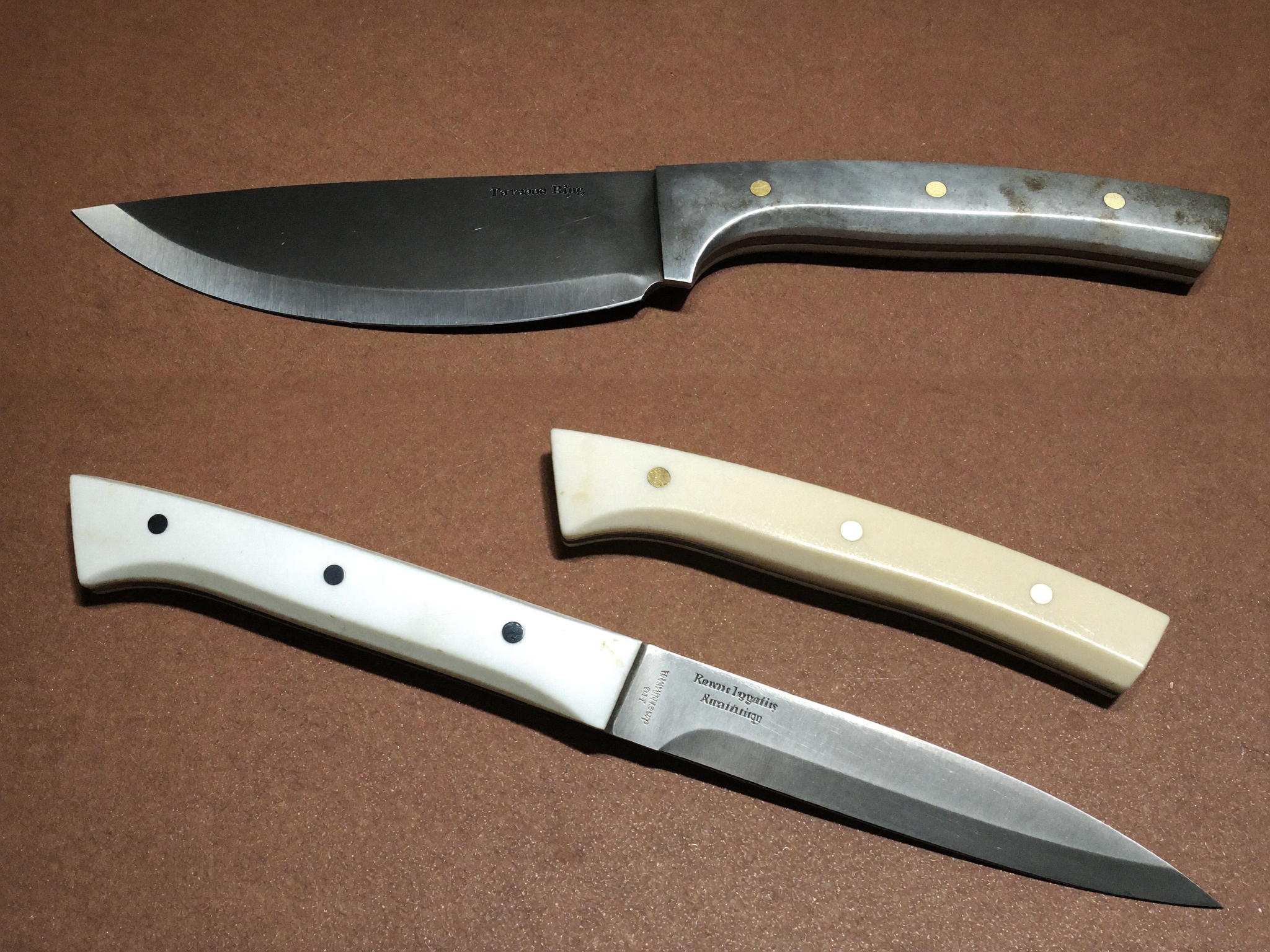
The table deliberately does not declare a universal winner. There is no useful rule saying that every Damascus knife is sharper than every stainless knife, or that every stainless knife is tougher than every Damascus knife.
A well-made knife needs several things to work together. The steel needs appropriate heat treatment. The blade needs sensible geometry. The edge needs to be sharpened properly. The handle needs to suit the user. The knife also needs to be used for jobs appropriate to its design.
How Damascus and stainless kitchen knives are constructed
Two knives can look similar on a product page while being built in completely different ways. Understanding a few common constructions makes shopping much easier.
Stainless monosteel
One main steel forms the blade and the cutting edge. There is no Damascus layering requirement. The finished knife may have a polished, satin, stonewashed, hammered or coated surface.
Stainless-core Damascus
A distinct cutting core runs down to the edge while patterned cladding sits on the sides. This construction is common in modern Japanese-style kitchen knives.
Pattern-welded Damascus
Different steels are forge-welded together and manipulated to create layers and patterns. Grinding, polishing and etching can reveal contrast between the materials.
This is why a product description that only says "Damascus steel knife" is incomplete. A useful listing should tell you more.
If the pattern is the main selling point but the seller avoids explaining the steel or construction, read our real vs fake Damascus guide before making a decision.
What research tells us about modern Damascus layers
Damascus marketing often repeats a simple explanation: the knife contains alternating hard and soft layers, so it combines hardness with flexibility.
That idea is appealing because it is easy to picture. Modern metallurgical research shows that the actual behaviour of pattern-welded steel can be more complicated.
Metallurgists John D. Verhoeven and Howard F. Clark studied carbon diffusion between layers in modern pattern-welded Damascus blades. At forging temperatures, carbon can move between neighbouring steels. Their findings help explain why a finished pattern-welded blade should not automatically be imagined as a stack of permanently high-carbon and low-carbon bands with completely separate properties.
The visible pattern can also be influenced by alloying differences and the way different regions respond during finishing and etching.
Separate research into welded Damascus billets has examined how repeated forging and layering affect microstructure. That work is useful because it shows that pattern-welded steel is a real metallurgical construction, not simply an ornamental drawing on the surface.
Modern Damascus and historical Damascus are not identical materials
The word Damascus also has an important historical context.
Historic blades associated with the Damascus name included crucible steels with distinctive internal structures. Modern pattern-welded kitchen knives are typically produced by a different manufacturing route.
Research into historical Damascus steel has documented complex microstructures and characteristic carbide arrangements. That history is fascinating, but it should not be used as automatic proof that a modern layered chef knife has exactly the same properties as a historical crucible-steel sword.
Is Damascus steel sharper than stainless steel?
Damascus steel is not inherently sharper than stainless steel.
A Damascus knife can arrive extremely sharp. A plain stainless knife can arrive equally sharp. Either can also arrive poorly sharpened.
Sharpness exists at the cutting edge. Blade geometry, edge angle, thickness behind the edge, abrasive progression and final sharpening all affect how a knife enters food.
On a clad Damascus knife, the decorative material on the sides may not even form the final cutting edge. The edge can be made from a separate central core.
Does Damascus hold an edge longer?
Again, not merely because it is Damascus.
Edge retention depends on the steel at the edge, its hardness, heat treatment, carbide structure, sharpening geometry and the materials being cut.
A Damascus-clad knife with a carefully heat-treated cutting core may hold an edge very well. A plain stainless blade made from a capable steel may also hold an edge very well.
Decorative outer layers cannot compensate for a poorly treated cutting core.
Does Damascus steel rust more easily than stainless steel?
Some Damascus steel can rust more readily than stainless steel, but the answer depends on the alloys used.
Stainless steels rely on alloy chemistry that allows a protective passive surface film to form. Chromium is central to stainless behaviour, and additional alloying elements can influence resistance under different conditions.
Research available through the US National Institute of Standards and Technology discusses passive films and their role in stainless-steel corrosion behaviour.
Stainless does not mean stain-proof. Salt, moisture, food residue and unfavourable storage conditions can still cause staining or corrosion.
There are several possible Damascus situations
- Stainless Damascus: both the outer patterned material and cutting core may use corrosion-resistant alloys.
- Stainless core with different cladding: the edge steel and visible outer layers may have different corrosion behaviour.
- Reactive pattern-welded Damascus: carbon and lower-alloy steels can require more attention to moisture and acidic foods.
Wash the knife after use and dry it promptly. Leaving a good knife wet beside the sink is unnecessary risk regardless of whether the blade is Damascus or plain stainless.
Is Damascus steel tougher than stainless steel?
Damascus steel is not automatically tougher than stainless steel.
Toughness describes a material's resistance to fracture and damage. In an actual knife, the outcome depends on steel chemistry, heat treatment, hardness, blade thickness, edge geometry and how the knife is used.
A very hard, thin chef knife can feel exceptionally precise in vegetables but may be less forgiving if it is twisted into a hard ingredient. A thicker knife made at a different hardness may behave differently.
Neither result is determined simply by the presence of a Damascus pattern.
What about chipping?
Chipping is often discussed as though it belongs to a particular steel category. In reality, hard steels ground to thin edges may be less tolerant of abuse than softer, thicker edges.
That tradeoff is one reason serious knife comparisons need more than a label such as "Damascus" or "high carbon stainless."
Which is easier to maintain?
For a person who wants the simplest possible ownership experience, a corrosion-resistant stainless steel knife is usually the easier choice.
That does not mean Damascus knives are difficult. It means you need to know which steels were used in the particular knife you bought.
Basic care for either type
- Wash the knife by hand after use.
- Dry the blade and handle promptly.
- Avoid leaving food residue on the blade for long periods.
- Use a suitable wood or plastic cutting board.
- Avoid glass, granite and ceramic cutting surfaces.
- Store the blade so the edge does not repeatedly strike other utensils.
- Sharpen when cutting performance begins to decline.
Extra care for reactive Damascus steel
If the blade contains reactive carbon steels, pay closer attention to water and acidic food residue.
Depending on the manufacturer's instructions and the type of steel, occasional use of a food-safe protective oil may also be appropriate when the knife is being stored.
Does Damascus need a special sharpening method?
Usually, the basic sharpening process is still about the steel at the cutting edge.
You are not sharpening the decorative layer count. You are creating and refining a cutting apex.
What you do want to avoid is unnecessarily scratching the patterned sides of the blade while sharpening.
For a more detailed process, read our guide to sharpening a Damascus knife.
The pattern is a perfectly good reason to choose Damascus
Knife comparisons sometimes become so obsessed with measurable performance that they pretend appearance does not matter.
It does.
A chef knife is a tool you may hold almost every day. If you enjoy looking at flowing layers of steel every time you prepare dinner, that has value.
Real layered constructions can create an enormous range of patterns. Twist, ladder, raindrop and other designs change how the underlying layers appear when the billet is manipulated and ground.
Damascus-clad kitchen knives can also produce softer flowing patterns around a visibly different central cutting steel.
Can a fake pattern be added to a blade?
Decorative patterns can be created in ways that do not necessarily prove traditional layered construction.
A product photograph therefore tells you only part of the story.
Look for specific information about the blade steel, core, cladding and construction. If a seller makes detailed material or performance claims, those claims should be supportable.
Australian consumers and businesses can read the Australian Competition and Consumer Commission guidance on false or misleading claims .
For a practical checklist, see our real vs fake Damascus steel guide.
Why does Damascus steel often cost more?
Patterned steel can require additional work.
Depending on the construction, production may involve preparing different materials, forge-welding a billet, manipulating the layers, grinding the blade, polishing the surface and using finishing or etching processes to reveal the pattern.
Damascus-clad kitchen knives can also involve more complex construction than a straightforward monosteel blade.
That additional work can justify a higher price. It still does not tell you exactly how well the knife will cut.
Premium monosteel stainless knives can also be expensive. The price may reflect advanced steel, heat treatment, precise grinding, hand finishing, handle work, manufacturing location or the reputation of the maker.
Spend your knife budget in this order
- The right knife shape for your cooking.
- A clearly identified cutting steel.
- A manufacturer with credible specifications.
- Blade geometry that suits your intended use.
- A handle that feels appropriate for you.
- The Damascus pattern, if you genuinely want it.
If you are ready to compare actual options rather than steel theory, browse our best Damascus knives guide, Damascus chef knife guide and budget Damascus knife guide.
Should you buy a Damascus or stainless steel knife?
Start with the way you actually cook rather than the material name printed on the product page.
Choose a plain stainless steel knife if...
- You want straightforward daily maintenance.
- You care more about cutting performance than decorative steel.
- You want to direct more of your budget toward steel, geometry or manufacturing quality.
- You are buying a practical working knife for a busy kitchen.
- You prefer a clean, understated appearance.
Choose a Damascus knife if...
- You genuinely enjoy the layered appearance.
- You have confirmed what steel forms the cutting edge.
- The blade shape, grind and handle already suit your needs.
- You understand the maintenance required by the specific alloys.
- You want practical performance combined with visual craftsmanship.
There is also a third option that makes the entire "Damascus vs stainless" argument much less dramatic: buy a stainless Damascus knife.
A good stainless Damascus chef knife can combine patterned cladding with corrosion-resistant steels and a capable cutting core.
The six-question Damascus buying test
-
What steel actually reaches the cutting edge?
Look for a named steel instead of vague wording such as "premium steel" or "high-quality Damascus." -
How was the pattern produced?
Is the blade pattern-welded, Damascus clad around a core, or finished with a decorative surface treatment? -
What is the blade geometry?
Length, thickness, profile and grind have a major influence on how the knife behaves on the cutting board. -
What maintenance does the manufacturer recommend?
This can help distinguish a low-maintenance stainless construction from a more reactive blade. -
Is layer count being used as the main sales pitch?
A large number may sound impressive, but layer count alone does not tell you how the edge performs. -
Would you still want the knife without the pattern?
If not, make sure you consciously understand that visual craftsmanship is part of what you are paying for.
Can you import Damascus knives into Australia?
Whether a knife has a Damascus pattern or plain stainless finish is not the main issue for Australian import rules.
The design and legal classification of the item matter.
If you are ordering a knife from overseas, check the current Australian Border Force guidance on prohibited weapons and any relevant rules that apply in your state or territory.
A product appearing on an international marketplace or offering shipping to Australia should not be treated as proof that every design can be imported without restriction.
Five Damascus vs stainless steel myths worth ignoring
Myth 1: More layers always mean a better knife
Layer count can influence the appearance and describe part of the construction. It does not independently prove superior sharpness, edge retention, toughness or corrosion resistance.
Myth 2: Damascus never rusts
Some Damascus constructions use stainless alloys and can have strong corrosion resistance. Others use more reactive steels. You need to know the actual materials.
Myth 3: Stainless steel cannot become extremely sharp
Stainless steels can take very sharp edges. Steel choice matters, but blade geometry and sharpening quality have a major influence on the result.
Myth 4: Every visible Damascus pattern proves the same construction
Patterns can come from different manufacturing methods. Look for meaningful specifications rather than relying only on appearance.
Myth 5: Expensive Damascus automatically beats inexpensive stainless
Price may reflect extra craftsmanship, materials and finishing. It does not provide a universal performance ranking.
Which steel makes more sense for everyday cooking?
For many home cooks, a good stainless chef knife offers the easiest balance of performance and maintenance.
You can cut onions, herbs, vegetables, meat and fruit without giving the blade much thought beyond normal washing, drying and sharpening.
Damascus becomes attractive when you want that same everyday usefulness with more visual personality.
A stainless-core Damascus chef knife can therefore be a very practical middle ground. It does not force you to choose between a beautiful blade and corrosion resistance.
The more important question is whether the specific knife is good.
Ask, "Is this particular Damascus knife better suited to my cooking than this particular stainless knife?"
That question forces you to compare specifications instead of labels, which is far more useful.
Damascus vs stainless steel FAQ
Is Damascus steel better than stainless steel?
Not automatically. Damascus usually describes a layered or patterned construction, while stainless describes corrosion-resistant steel chemistry. Many Damascus kitchen knives are themselves stainless. Compare the cutting steel, heat treatment, blade geometry, sharpening and maintenance requirements.
Is Damascus steel sharper than stainless steel?
No. Either type can be sharpened to a very fine edge. Sharpness depends on edge geometry, steel, heat treatment and sharpening. A Damascus pattern or high layer count does not automatically make a knife sharper.
Does Damascus steel stay sharp longer?
Not simply because it is Damascus. Edge retention depends heavily on the steel at the cutting edge, its heat treatment, hardness, geometry and how the knife is used.
Does Damascus steel rust?
It can. Some Damascus knives use corrosion-resistant stainless steels while others use more reactive carbon or alloy steels. Check the manufacturer's steel specification and care instructions.
Can Damascus steel be stainless?
Yes. Many modern kitchen knives use stainless Damascus cladding around a stainless cutting core. Damascus and stainless are therefore not mutually exclusive categories.
Is 67-layer Damascus better than fewer layers?
Not automatically. Layer count can describe construction and influence appearance, but it does not independently measure sharpness, toughness, corrosion resistance or edge retention.
Is a 67-layer Damascus knife sharper?
The number of layers does not determine sharpness. A 67-layer knife can be extremely sharp if it has good blade geometry and a well-sharpened cutting core, but the layer number itself is not the cause.
Which is easier to sharpen, Damascus or stainless steel?
Sharpening difficulty depends mainly on the steel at the cutting edge and its heat treatment. A hard Damascus-core knife may take more work than a softer stainless knife, but another pair of knives could behave differently.
Which is better for a beginner?
A corrosion-resistant stainless chef knife is a straightforward first choice because maintenance is simple. A stainless Damascus chef knife can be equally practical if the cutting steel and construction are clearly specified.
Can Damascus knives go in the dishwasher?
Hand washing is the safer routine for a good kitchen knife. Dishwasher detergents, moisture, heat and movement can be hard on fine edges, blade finishes and handle materials.
Why is Damascus steel so expensive?
Damascus knives can require additional work to create layered material, develop the pattern, grind the blade and finish or etch the surface. Price can also reflect the cutting steel, heat treatment, handle and maker.
Is Damascus worth the extra money?
It can be if you value the pattern, craftsmanship and overall knife quality. If you care only about cutting performance, a well-made plain stainless knife may provide better value because you are not specifically paying for decorative layered construction.
Related Damascus knife guides
Buy the knife, not the buzzword
Damascus steel wins on visual character. Stainless steel usually wins on simplicity of care. Neither automatically wins on cutting performance.
A beautifully made Damascus knife with a capable cutting core, appropriate heat treatment and good geometry can be an excellent kitchen tool.
A plain stainless knife built with the same attention to steel and geometry can also be excellent, sometimes for less money.
When two knives are sitting in your browser tabs, stop counting layers for a moment.
Find the steel that forms the cutting edge. Check the blade profile. Look at the grind. Think about corrosion resistance and maintenance. Consider the handle. Then decide how much the Damascus pattern matters to you.
If the Damascus knife performs well and you love looking at it, that is a strong reason to own it.
Ready to compare actual knives? Start with our Damascus chef knife guide.
Sources
- Verhoeven, J. D. and Clark, H. F. Carbon Diffusion Between the Layers in Modern Pattern-Welded Damascus Blades . Materials Characterization.
- Lacey, B. and Brooks, C. R. Microstructural Analysis of a "Welded Damascus" Knife Blade Billet . Materials Characterization.
- Peterson, D. T., Baker, H. H. and Verhoeven, J. D. Damascus Steel, Characterization of One Damascus Steel Sword . Materials Characterization.
- US National Institute of Standards and Technology. Research on passive films and stainless-steel corrosion .
- Australian Competition and Consumer Commission. False or misleading claims .
- Australian Border Force. Prohibited goods: weapons .