How Much Does a Damascus Knife Cost?
A Damascus knife can cost less than A$100 or several hundred dollars for a single kitchen knife. Handmade and collector pieces can cost considerably more. The pattern on the blade is only one part of the price. Cutting steel, heat treatment, blade geometry, manufacturing method, finishing, handle materials and the amount of handwork all matter.
How much does a Damascus knife cost in Australia?
Quick answer: a practical shopping range for a single Damascus kitchen knife is roughly A$60 to A$500+. Entry-level knives are available below A$100, many named-steel production knives sit around A$120 to A$300, and premium production knives commonly move above A$300. Handmade work can go well beyond those figures.
The important part is that price and layer count do not tell you everything about quality. A knife with a clearly identified cutting steel, sensible blade geometry and good manufacturing can be a more useful purchase than a more expensive knife sold primarily around an impressive-looking pattern.
Damascus knife price ranges explained
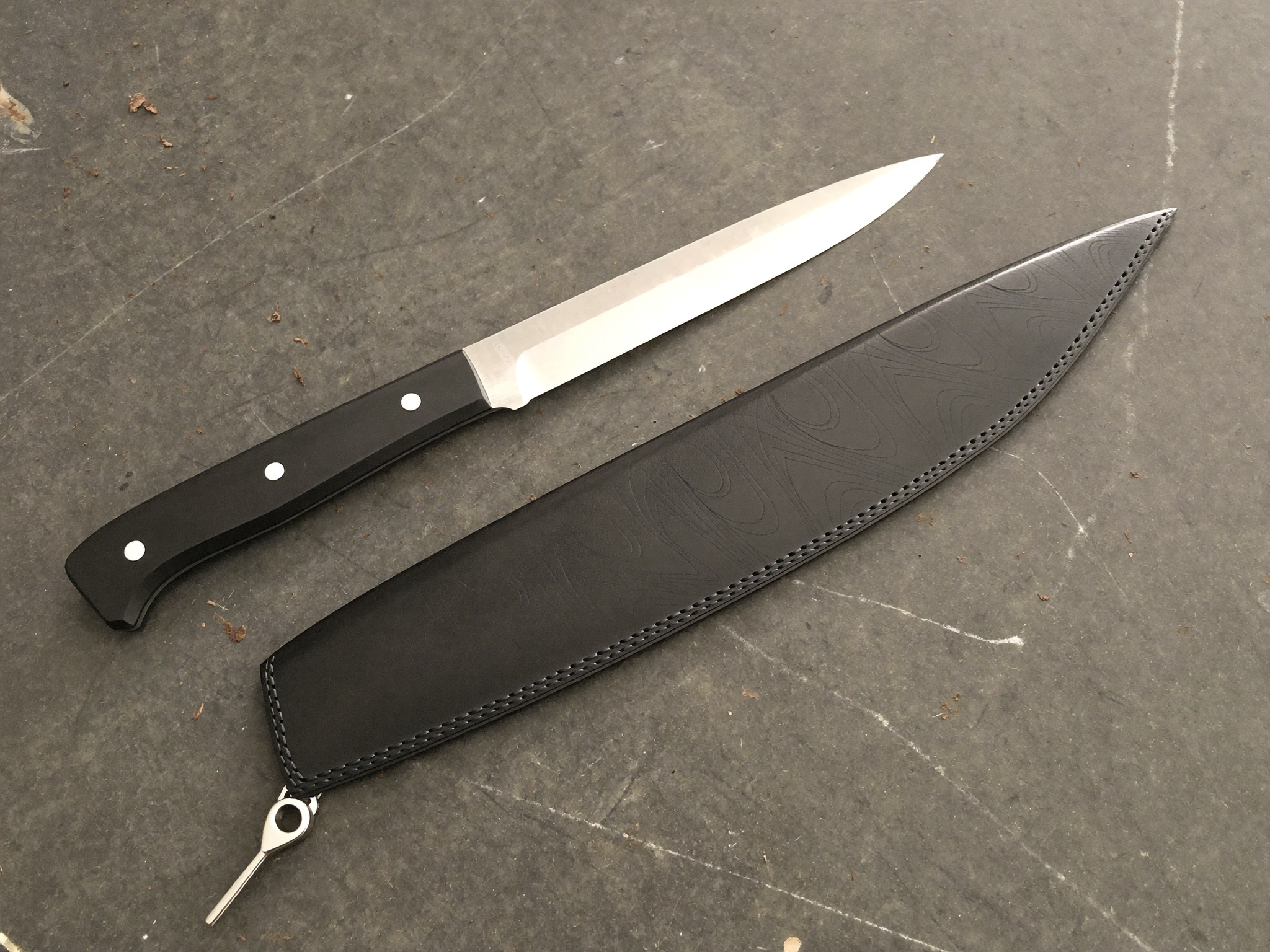
There is no official price that makes a Damascus knife genuine or high quality. Instead, it is more useful to treat the market as several broad pricing bands and then inspect what you actually receive within each band.
| Typical price | Market tier | What you may find | What to check |
|---|---|---|---|
| Under A$80 | Budget | Lower-cost chef knives, smaller knives, lesser-known brands and products marketed heavily around appearance. | Cutting steel, construction method, seller information, returns policy and whether the word Damascus refers to layered construction or mainly the visual pattern. |
| A$80 to A$150 | Entry | Damascus-clad kitchen knives, more identified steel types and products with better specification information. | Core steel, blade geometry, handle construction, hardness claims and manufacturing details. |
| A$150 to A$300 | Mid-range | Many VG-10, AUS-10 and comparable stainless-core Damascus kitchen knives from established production ranges. | Whether the additional price reflects better steel, heat treatment and finishing rather than simply a larger advertised layer count. |
| A$300 to A$500 | Premium | Premium production knives, specialist steels, higher-end handles and more elaborate finishing. | Steel specification, blade grind, maker reputation, manufacturing origin and what the additional cost actually provides. |
| A$500+ | Artisan | Handmade knives, specialist makers, intricate patterns, custom handles, unusual materials and collector-oriented pieces. | Maker provenance, individual craftsmanship and whether you are paying primarily for utility, artistic work, rarity or all three. |
Damascus knife price spectrum
Price generally increases as you move from large-scale production toward premium materials, individual finishing and handmade work, but a higher price is not a guarantee of better cutting performance.
Why are some Damascus knives so expensive?
Two knives can both have a visible Damascus pattern yet require completely different materials, manufacturing methods and amounts of skilled labour. These factors usually tell you more than the advertised layer count.
The cutting steel
Many modern Damascus kitchen knives are laminated. A harder cutting core sits between layers of patterned steel.
In that design, the core forms the cutting edge. Knowing the core steel is therefore much more useful than seeing only a claim such as "67 layers."
Heat treatment
Steel grade alone does not determine the finished knife. Heat treatment is used to develop the hardness and microstructure required by the manufacturer.
Two knives made from nominally similar steel can behave differently if they are processed differently.
Blade geometry
A beautiful knife can still feel thick and inefficient when cutting food if too much steel remains behind the edge.
Producing a thin, even and appropriate grind takes manufacturing control and skilled finishing.
Layered construction
Creating patterned layered steel involves additional processing compared with making a straightforward blade from a single piece of steel.
More elaborate patterns can require repeated forging, manipulation, grinding, polishing and etching.
Handle and finishing
Synthetic handles can be relatively inexpensive. Stabilised timber, carefully selected hardwoods, premium composites and individually fitted materials can add cost.
Polishing, rounding edges, fitting handles and producing an even final finish also take time.
Production scale
A factory producing thousands of knives can spread equipment and labour costs across a large production run.
A bladesmith producing one knife at a time may personally forge, grind, heat treat, finish and sharpen each blade.
Does a higher Damascus layer count mean a better knife?
No. Layer count can describe part of a knife's construction and appearance, but it is not a universal quality score.
What layer count can tell you
- How a manufacturer describes its layered construction
- Something about the intended visual pattern
- The approximate number of layers in a laminate or billet
- Potential manufacturing complexity
What layer count cannot tell you
- How thin the blade is behind the edge
- Whether heat treatment is appropriate
- How comfortable the handle will feel
- How well the knife has been sharpened
- Whether a more expensive knife will perform better
If you want to understand the construction itself, read our complete Damascus steel guide. You can also compare commonly advertised kitchen-knife steels in our VG-10 vs AUS-10 vs 10Cr15CoMoV comparison.
Why the word "Damascus" can make prices confusing
Modern retailers use the word Damascus for several related but different constructions. That is one reason two products carrying the same general label can have very different prices.
Historic wootz Damascus
Historic Damascus blades associated with wootz were crucible steels. Their characteristic surface appearance came from structures formed within the steel rather than from stacking modern sheets of contrasting steel.
Metallurgical research by J.D. Verhoeven, A.H. Pendray and E.D. Gibson examined the cementite bands responsible for characteristic patterns in reconstructed wootz Damascus blades.
Modern welded Damascus
Pattern-welded steel can be made by combining different steels, forge welding them and manipulating the billet before grinding and etching the finished blade.
A published microstructural study of a welded Damascus knife billet documented layers of different steels that had been repeatedly forged until they became extremely thin.
What does the Australian Damascus knife market look like?
Retail pricing does not fall into perfectly defined categories, but these bands give you a practical way to understand what you are looking at when comparing knives.
These figures are shopping ranges rather than fixed valuations. Discounts can move a production knife into a lower bracket, while premium handles, specialist steels, limited production and handwork can push another knife much higher.
Compare Damascus knives at different price points
Looking at real products makes the price ranges easier to understand. These examples represent different types of Damascus kitchen knives. Prices can change, so the buttons take you to the current Amazon listing rather than showing a fixed price here.
KITCHENDAO 20cm 67-Layer Damascus Chef Knife
A full-size chef knife that provides a useful example of the more accessible part of the Damascus kitchen-knife market.
MITSUMOTO SAKARI 20cm VG-Pro Damascus Chef Knife
This 20cm chef knife gives you another useful point of comparison when looking beyond generic Damascus descriptions and toward a knife sold with a named core-steel family.
XINZUO 21.9cm Damascus Gyuto
A larger Japanese-style gyuto gives you a useful comparison with standard 20cm chef knives and shows why blade size, construction, materials and finishing can all influence the asking price.
Why we do not display fixed Amazon prices: retailer prices, discounts and availability can change. Using the current-price button means you can see the live listing rather than relying on an old figure stored in this article.
Are cheap Damascus knives fake?
Not automatically. A low price is a reason to investigate the product carefully, not proof that it is fake.
Large-scale manufacturing can produce genuinely layered steel much more cheaply than an individual bladesmith can. At the same time, some inexpensive products rely heavily on the visual appeal of a pattern while providing little useful information about the actual steel or construction.
Instead of judging authenticity solely from price, inspect what the seller tells you.
Check these details before buying a very cheap Damascus knife
- Does the manufacturer identify the cutting or core steel?
- Does it explain whether the knife is layered, clad or pattern-welded?
- What does the advertised layer count actually refer to?
- Does the seller provide realistic hardness and steel information?
- Is the manufacturing origin clearly stated?
- Are care instructions available?
- Is there a clear returns or warranty policy?
- Does the retailer make exaggerated performance claims without explaining the construction?
A cheap knife with transparent specifications may be easier to evaluate than an expensive knife whose listing gives you little more than a layer count and dramatic photographs.
How much should you spend on a Damascus chef knife?
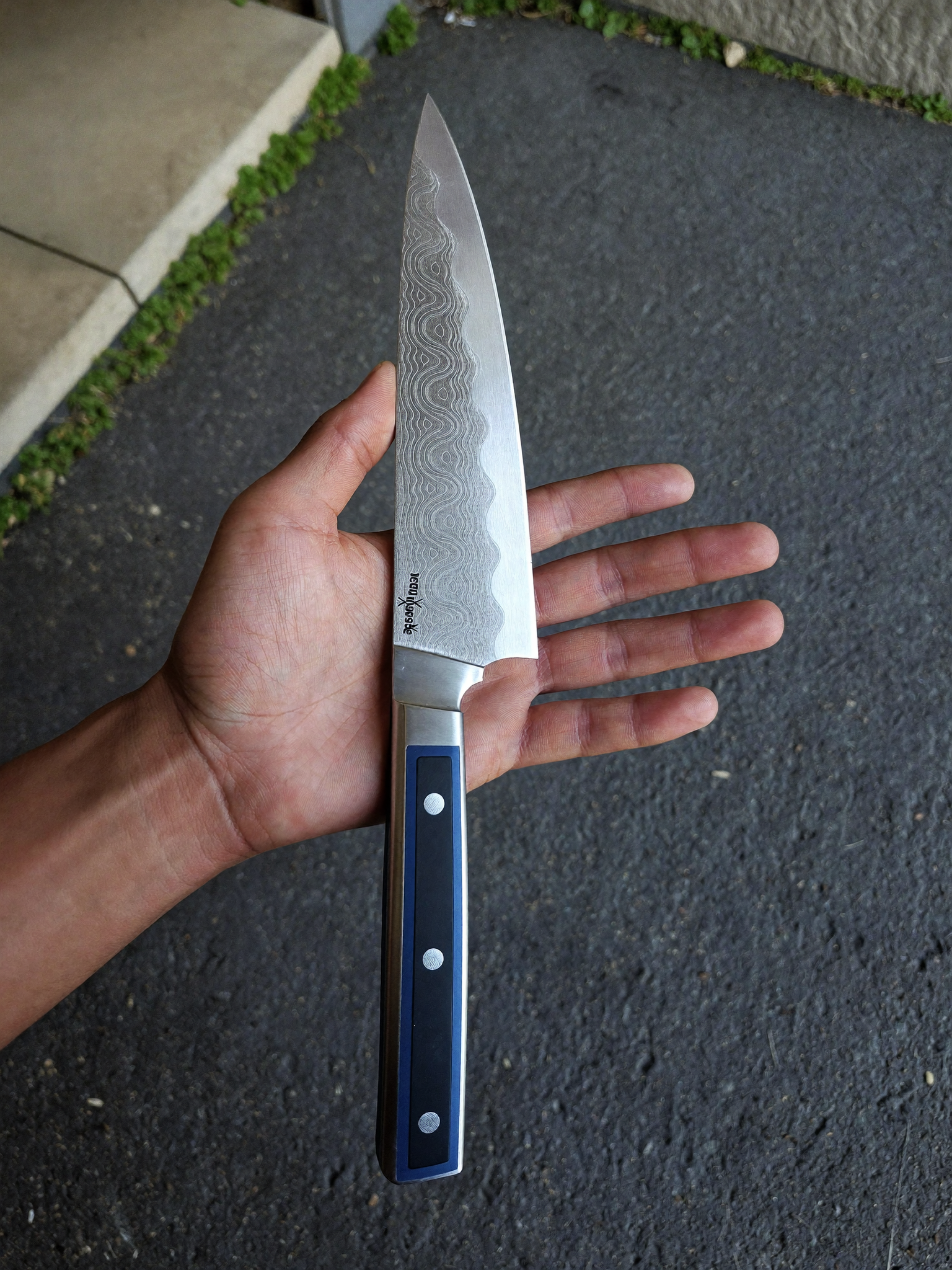
Your ideal budget depends on whether you mainly want the appearance, everyday kitchen performance or individual craftsmanship.
You mainly want the Damascus look
If the pattern is one of your main priorities and you cook casually, you do not necessarily need to spend several hundred dollars.
Look for a seller that clearly identifies the construction and cutting steel instead of buying whichever knife advertises the most layers.
You cook regularly
Roughly A$120 to A$300 gives you access to a broad range of Damascus and Damascus-clad chef knives with more detailed specifications.
This is a useful part of the market for comparing steel, dimensions, grind, handle design and manufacturing quality.
You want craftsmanship
Once prices move well into several hundred dollars, the purchase may include individual finishing, complex patterns, specialist steels, premium handles and work performed by a particular maker.
At that point you may be buying craftsmanship and individuality as well as a cutting tool.
Damascus knife budget estimator
Choose what you want from the knife and the tool will show a practical starting budget. This is a shopping guide rather than a valuation of a particular product.
What are you actually paying for?
A higher price can represent better manufacturing, but it can also reflect decoration, rarity, branding or individual craftsmanship. Separating those things makes comparing knives much easier.
Performance-related value
- Appropriate steel selection
- Well-controlled heat treatment
- Thin and consistent blade geometry
- Quality sharpening
- Secure handle construction
- Reliable quality control
Craft and aesthetic value
- Complex Damascus patterning
- Hand forging or individual finishing
- Premium decorative handle materials
- Maker reputation
- Limited production
- Collector appeal
Is Damascus more expensive than normal stainless steel?
It often can be, but the comparison is not as simple as Damascus equals expensive and stainless equals cheap.
Many modern Damascus kitchen knives are themselves made partly or entirely from stainless steels. For example, a knife may use stainless Damascus cladding around a harder stainless cutting core.
A straightforward monosteel kitchen knife avoids the additional work involved in producing patterned cladding, which can reduce manufacturing cost. However, premium monosteel knives can easily cost more than inexpensive Damascus knives.
Steel, heat treatment, grind, finishing, handle construction and manufacturing scale remain important regardless of whether the blade has a patterned surface.
Read our full Damascus steel vs stainless steel comparison for a deeper look at the differences.
How much do Damascus knife sets cost?
Knife sets require a slightly different way of thinking about price because the number and type of knives included can vary substantially.
A two-piece set and a six-piece block set should not be compared only by their total cost. Look at which knives are included and whether you will actually use them.
A set can move into several hundred dollars even when each individual knife is positioned in the middle of the market. Premium multi-knife collections can rise much further because the materials and finishing are repeated across every piece.
If you are building a kitchen setup from scratch, one capable chef knife plus a smaller utility or paring knife may cover more real kitchen work than a large set containing blades you rarely use.
Why can handmade Damascus knives cost A$500 or more?
Handmade prices make more sense when you consider how much individual work may be involved before a finished knife reaches the customer.
Billet preparation
A maker producing pattern-welded steel may begin by preparing multiple pieces of steel, stacking them and forge welding the billet before the blade itself can be shaped.
Pattern manipulation
More elaborate patterns can require additional cutting, restacking, twisting, forging or machining before the billet reaches its final form.
Individual finishing
Grinding, hand sanding, polishing, etching, handle fitting and final sharpening performed one blade at a time create a completely different labour cost from large-scale factory production.
This does not mean a A$1,000 handmade knife will automatically cut five times better than a A$200 production knife. At artisan prices, craftsmanship, rarity, maker identity and artistic value can become substantial parts of what you are paying for.
Price and your consumer rights in Australia
The amount paid can also be relevant when considering what a consumer may reasonably expect from a product.
The Australian Competition and Consumer Commission explains that products sold to consumers must meet consumer guarantees, including the guarantee of acceptable quality.
When determining acceptable quality, relevant considerations can include what the product is, what it is made from, how it was made, claims made by the business and how much the product cost compared with similar goods.
Acceptable quality includes matters such as safety, durability, freedom from defects, acceptable appearance and the ability to perform the functions normally expected of that type of product.
Read the official ACCC consumer rights and guarantees guidance .
Common mistakes when judging a Damascus knife by price
Assuming expensive automatically means better cutting
Price can include decorative materials, branding, packaging, limited production and hand finishing. Those things may have value without necessarily improving cutting efficiency.
Assuming cheap automatically means fake
Large-scale manufacturing changes what layered steel can cost. Evaluate the steel and construction information instead of trying to authenticate a knife from price alone.
Buying the largest layer number
A knife advertised with 67 layers is not automatically better than a knife with fewer layers. The steel at the edge and the way the finished blade is made matter much more.
Ignoring maintenance
Even a very expensive kitchen knife eventually needs sharpening and appropriate care. Premium pricing does not make an edge permanently sharp.
Damascus knife price checklist
Before paying extra for a patterned blade, see how many of these questions the product listing can answer.
- What steel forms the actual cutting edge?
- Is it pattern-welded steel or patterned cladding around a separate core?
- What does the advertised layer count refer to?
- Does the manufacturer provide hardness information?
- Where is the knife manufactured?
- What is the blade length?
- What handle material is used?
- Is the blade intended for everyday kitchen work?
- Does the manufacturer provide useful maintenance instructions?
- Are the warranty and returns terms easy to find?
- Does the higher price come from performance-related construction, decorative work or both?
Learn more before choosing a Damascus knife
Price makes more sense once you understand the steel and construction behind the knife. These guides continue the research.
Frequently asked questions about Damascus knife prices
How much is a real Damascus knife?
There is no minimum price that proves a knife is genuine Damascus. Layered and Damascus-clad kitchen knives can appear below A$100, while many named-steel production knives sit around A$120 to A$300. Premium and handmade knives can cost A$300 to well above A$500. Construction and steel information are more useful than price alone.
Why are Damascus knives expensive?
Cost can reflect layered steel production, heat treatment, grinding, polishing, etching, handle construction, quality control, skilled labour and maker reputation. Handmade knives can cost more because one person may perform much of this work individually.
Is a A$100 Damascus knife good?
It can be. At around A$100, check whether the manufacturer identifies the cutting steel, explains the construction and provides realistic specifications. Price by itself cannot tell you whether the heat treatment, blade geometry or sharpening are good.
Is a A$200 Damascus knife worth it?
Around A$200 sits in an active part of the Damascus kitchen-knife market. You can find products with identified steels and established constructions around this level. Whether a particular knife is worth the price depends on its steel, geometry, manufacturing quality, handle and what you value.
Are more Damascus layers better?
Not necessarily. A larger layer count can change the appearance and manufacturing process, but it does not automatically improve the cutting steel, heat treatment or blade geometry.
How much does a handmade Damascus knife cost?
Handmade Damascus knives can begin in the several-hundred-dollar range and rise considerably depending on the maker, steel, pattern complexity, handle materials and amount of individual labour involved. Collector pieces can cost much more.
Are cheap Damascus knives fake?
Not automatically. Genuine layered construction can be produced relatively inexpensively at scale. Buyers should instead verify what the manufacturer means by Damascus and look for clear information about the cutting steel and construction.
Is Damascus steel better than stainless steel?
Damascus and stainless steel are not simple opposites. Many modern Damascus kitchen knives use stainless steels in both the core and cladding. Actual performance depends on the specific steels, heat treatment, geometry and construction rather than the pattern alone.
Why can two 67-layer Damascus knives cost completely different amounts?
Layer count is only one specification. Two 67-layer knives may use different core steels, different heat treatments, different grinding methods, different handle materials and very different levels of finishing. One may also be mass-produced while another receives significantly more individual handwork.
Should I buy the cheapest Damascus knife I can find?
Compare specifications before choosing solely on price. A low-cost knife can be useful, but you should still check the cutting steel, construction, seller information, dimensions and returns policy.
Research and useful sources
This guide combines practical market guidance with government consumer information and published metallurgy research.
- Australian Competition and Consumer Commission: Consumer rights and guarantees
- Australian Border Force: Prohibited goods and import information
- J.D. Verhoeven, A.H. Pendray and E.D. Gibson: Wootz Damascus steel blades
- Beth Lacey and Charlie R. Brooks: Microstructural analysis of a welded Damascus knife blade billet
So, how much should a Damascus knife cost?
There is no single correct price, but the Australian market gives you a useful framework.
Below A$80, investigate the construction carefully. Around A$80 to A$150, you enter the main entry-level market. Between roughly A$150 and A$300, you can compare a broad range of named-steel production knives. Above A$300, premium materials, finishing and specialist manufacturing become increasingly common. At A$500 and beyond, handmade work, complex patterning and collector appeal can become major parts of the price.
Most importantly, do not use the Damascus pattern or layer count as your only measure of value. Find out what steel forms the cutting edge, how the knife is constructed, whether its specifications are clearly explained and what the additional money is actually buying.
If you want to understand the material before choosing a knife, continue with our complete Damascus steel guide .