
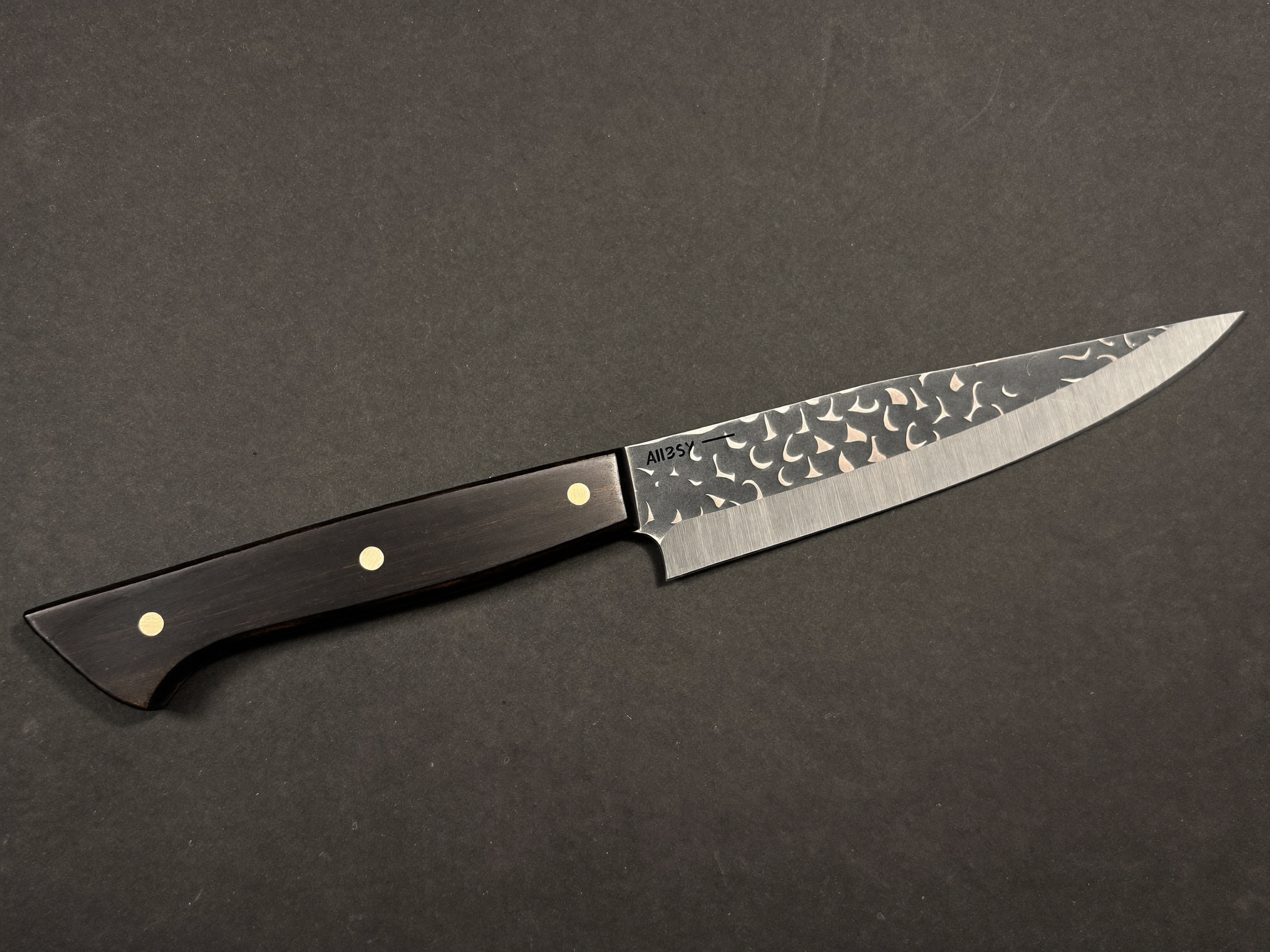
How to sharpen a Damascus knife
A steady angle. The right stone. A clean burr. Learn the parts that make a sharp edge and keep the patterned blade looking good.
The short answer
“Damascus” describes the blade's layered appearance or construction. It does not tell you the exact edge angle or the correct stone. The steel at the cutting edge, its geometry and the way you use the knife matter more than the pattern.
Set up before the first stroke
Use a stable waterstone around 1000 grit, a nonslip base or damp towel, water for the stone and a clean cloth. An optional 3000 to 6000 grit stone refines an edge that has already been formed. A heavily chipped knife may need a coarser stone or a professional repair.
Read the stone label first. Some waterstones must be soaked; others only need surface water. Keep oil off a waterstone. Clear the work area, put the stone on a stable surface, and keep your fingertips above and behind the cutting edge.
What angle should you use?
Use the manufacturer's angle when you know it, or follow the bevel already on the knife. Published angles differ even among familiar brands: WÜSTHOF gives 14° per side for standard blades and 10° for its Asian style blades, while Shun advises 16° for its double bevel knives. These are examples for those knives, not universal Damascus specifications.
Some Asian style WÜSTHOF models. Verify the exact model before copying this angle.
WÜSTHOF's published standard blade angle. Another maker may differ.
Shun's published double bevel angle. It does not apply to a single bevel knife.
Unsure of the bevel? Colour a short section of the existing bevel with a washable marker, make one very light pass, and see where the stone removes the mark. Adjust your hand until it touches the bevel evenly. Keep that position steady along the whole edge. For a single bevel knife, follow its maker's instructions or use a sharpener familiar with that geometry.
How to sharpen it, step by step
- Prepare the stone. Soak or wet it as directed by its maker. Set it on a nonslip base so it cannot slide.
- Find the existing bevel. Hold the edge to the stone at its original angle. Start with a medium grit for a normally dull blade.
- Work the first side. Move the edge across the stone from heel toward tip while holding the angle. Use controlled, even pressure and cover the entire edge.
- Feel for a burr carefully. With the knife still, check from spine toward edge, never along the cutting edge. A continuous slight burr on the opposite side means you have reached the apex.
- Repeat on the other side. Match the angle and work until the burr moves across. Use progressively lighter alternating passes to reduce it.
- Refine and check. If desired, repeat lightly on a finer stone. Remove the remaining burr with light alternating strokes or a suitable strop, rinse and dry the blade, then try a controlled cut on paper or a tomato.
A deeply chipped edge, serrated blade or traditional single bevel knife calls for a different approach. If you cannot identify the edge geometry, ask a professional sharpener before removing metal.
Which whetstone grit should you start with?
Use the finest stone that can restore the edge in a reasonable time. Most routine kitchen sharpening can begin near 1000 grit. A coarser 200 to 400 grit stone removes material quickly and is better reserved for substantial damage or reshaping. A 3000 to 6000 grit stone is optional for refinement; it will not repair a chipped edge by itself.
Grit numbers from different stone standards are not perfectly interchangeable. Follow the maker's directions for your particular stone rather than trying to complete every stage on this chart.
See the sharpening stroke
Work in smooth, controlled passes along the whole edge, from heel to tip. Maintain contact on the bevel while the blade moves. You may use edge leading or edge trailing strokes as your stone maker recommends; the essentials are angle control, reaching the apex and removing the burr. The diagrams show direction, not a required number of passes.
Edge leading, blade gliding away from you along the stone. This is where the bevel is actually set. Keep the spine slightly raised and locked.
The return stroke, edge trailing, with the exact same angle. Same hand pressure, same number of passes, flip sides, keep it boring and consistent.
The two biggest coaching notes are boring on purpose. First, count your strokes, because counting is how you keep both sides equal. Second, check the edge between stages with a gentle thumb-nail drag or the paper test, because the stone tells you nothing and the edge tells you everything.
Angles by blade type
Match the angle to the blade, not the brand name. The three buckets below cover the Damascus knives most people actually own.
Thin Japanese-style blades. Gyutos, nakiris and santokus from the low angle makers. Beautiful cutters, real chip risk on bone, frozen food and careless boards.
Mainstream kitchen knives. Chef knives, sets, most clad Damascus with VG-10 or AUS-10 cores. The daily-driver band and the safest default.
Outdoor, EDC and hunting. Bowie, fixed blade and folder edge geometries. Tougher and slower, exactly what camp work demands.
Keep your fingers away from the edge. A quick paper cut test after cleaning and drying tells you more than trying to feel sharpness with a fingertip.
Will sharpening damage the Damascus pattern?
Normal whetstone sharpening works on the narrow edge bevel. The visible pattern on the blade face should remain largely untouched if you keep that face off the abrasive. Avoid rocking the knife onto the patterned side and wipe abrasive slurry away after sharpening. On etched finishes, contact with an abrasive can change the surface appearance, even on genuinely layered steel.
Patterned appearance alone cannot establish how a knife was made. See our guide to real and imitation Damascus for construction clues, and our cleaning and care guide for everyday maintenance.
Questions people ask before sharpening
How often should I sharpen a Damascus kitchen knife?
Sharpen when clean cuts begin to take more force or appropriate honing stops helping. The interval depends on the edge steel, cutting board, technique and frequency of use. There is no reliable calendar schedule for every knife.
Do I need a diamond stone for VG-10?
No. An appropriate waterstone can sharpen VG-10. A diamond abrasive is another option, especially if you want faster cutting or a flatter abrasive surface. Follow the stone and knife makers' instructions.
Is honing the same as sharpening?
Honing can help maintain an edge between sharpening sessions; sharpening deliberately removes metal to form a new apex. Use a honing tool suited to the knife and avoid forcing a thin blade against a coarse rod. Shun explains the distinction and its knife specific advice.
Can I sharpen a serrated or single bevel Damascus knife this way?
No. The steps above describe a straight edged, double bevel kitchen knife. Serrations and traditional single bevel edges need tools and techniques suited to their geometry.
Keep the new edge working
Hand wash, dry promptly and use a suitable cutting board. Once you know the edge's original angle, future touch ups should need less work. Browse our Damascus chef knife guide if you are comparing blade designs, or read what a Damascus knife actually is.
Sources for maker specific angles and maintenance: WÜSTHOF sharpening information, Shun sharpening guidance and Shun on honing versus sharpening. Published angles apply to the makers' stated knives; confirm your own model.