Best Damascus Knives in Australia, chosen by the work they do.
Start with your board, food and grip. Then read the steel claim and check who will deliver the knife. The pattern can be the part you love, but it is not the part that cuts.
Short answer
For one main kitchen knife, compare the PAUDIN 8-inch VG10 chef knife and the MITSUMOTO SAKARI 20 cm chef knife. An 18 cm AUS-10 santoku is another option for a smaller board. Add the 18 cm nakiri for vegetable-heavy prep or the 13.5 cm petty for small work. If you need several shapes at once, check the contents of the PAUDIN three-piece set. These are fit-by-task suggestions based on supplied titles and images, not results of hands-on tests.
As an Amazon Associate, we earn from qualifying purchases. The eight products and images were supplied for this guide. We have not purchased or lab-tested them, verified prices or customer ratings, or inspected the live sellers. Confirm the exact listing, delivery and returns before ordering.
What do you cut most?
Choose the task first. Each suggestion points to an actual product section below, with the steel details and missing information clearly marked.
Start with one main blade.
A chef knife around 20 cm covers a broad range of board work. Decide whether a named VG10 core, the handle material or a longer slicing stroke matters most to you.
PAUDIN VG10 chef knife · MITSUMOTO 20 cm chef knife · XINZUO long gyutoGive vegetables the lead.
A tall, straighter nakiri is purpose-built for repeated vegetable cuts. A shorter santoku can be a useful compromise if you also want one general prep knife.
MITSUMOTO 18 cm nakiri · 18 cm AUS-10 santokuAdd a second job or give a useful knife.
The 13.5 cm petty is for small produce and trimming. The hecef offers a full-size wood-handle gift option, while a three-piece set needs an item-by-item contents check.
VG10 petty knife · hecef olive-wood chef knife · PAUDIN three-piece setEight ways into the kitchen.
Every entry states a practical reason to consider it and a detail you should verify with the seller.
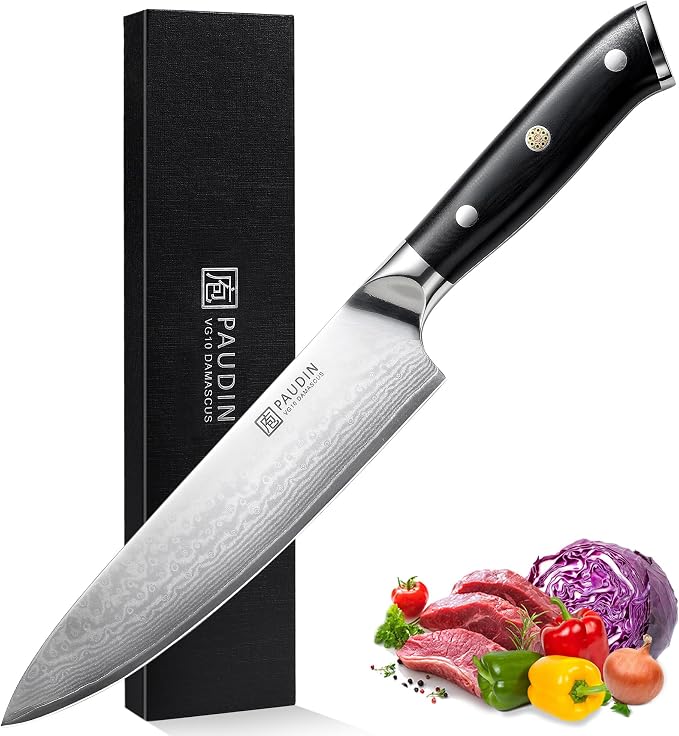
PAUDIN 8-inch VG10 Damascus chef knife
One main prep knife, particularly if you prefer a synthetic handle to wood.
8-inch blade · VG10 core stated · G10 handle
If you want one knife to start a kitchen, a full-size chef blade is the easiest place to compare. This PAUDIN title supplies a useful steel detail, a VG10 core, alongside a 67-layer claim and G10 handle. The named core is more informative than the layer count because it tells you what the maker says reaches the edge.
Before buying: The 8-inch length asks for enough board and storage space. Verify the actual alloy, blade thickness and seller before paying; a title does not measure cutting performance.
Check the live listing ↗
MITSUMOTO SAKARI 20 cm VG-Pro Damascus chef knife
A single everyday knife when a 20 cm length feels right.
20 cm blade · VG-Pro named · core composition to check
At 20 cm, this is another main-board candidate. It is long enough for common chopping and slicing without stepping up to the XINZUO’s 21.9 cm blade. The supplied title uses VG-Pro and Damascus, which makes it worth asking for an exact construction specification.
Before buying: VG-Pro should not be assumed to be the same alloy as VG10. Compare weight, grip and the actual steel at the cutting edge with the PAUDIN before choosing between them.
Check the live listing ↗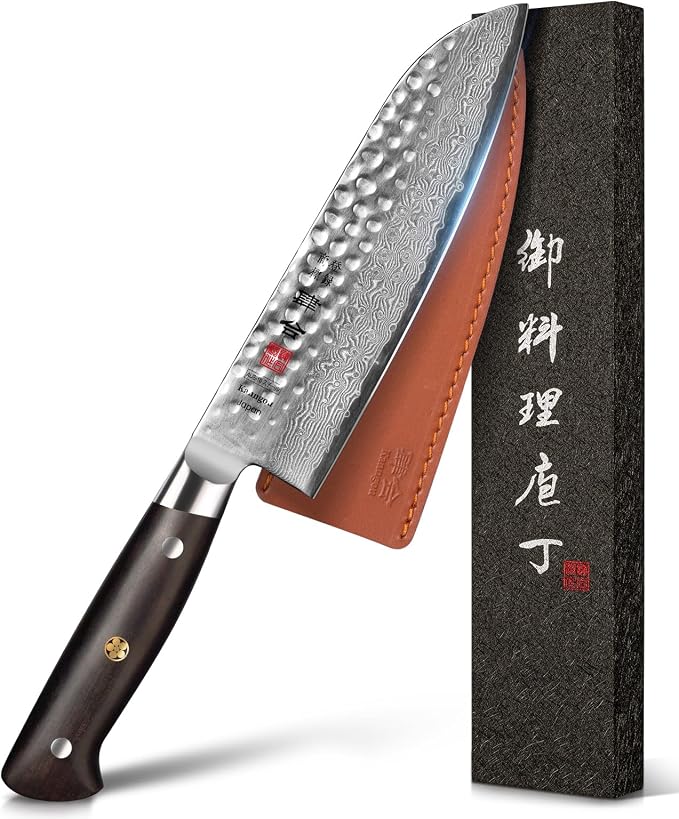
18 cm Damascus santoku with AUS-10 core
A versatile knife for a compact kitchen and regular vegetables, meat and fish prep.
18 cm blade · AUS-10 core stated · santoku shape
A shorter santoku can be easier to move on a modest cutting board. This one’s supplied title names AUS-10 at the core, so the steel claim is specific enough to research. A broad blade and shorter reach distinguish it from a longer gyuto.
Before buying: You still need to verify the finished knife’s grind, handle and patterned cladding. Aichi Steel’s general description of AUS-10 does not test this individual product.
Check the live listing ↗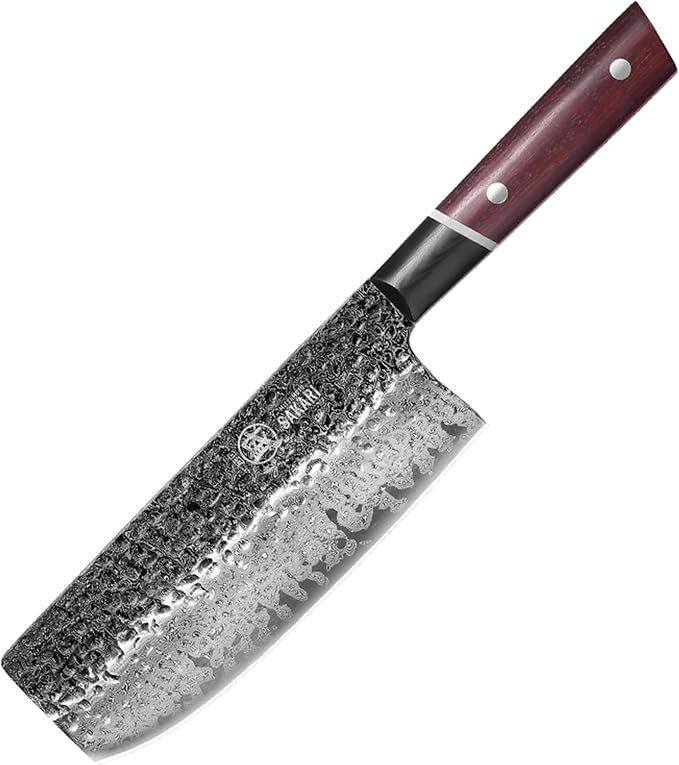
MITSUMOTO SAKARI 18 cm Damascus nakiri
A second knife for vegetable-heavy cooking, or a first knife if that is genuinely your main task.
18 cm blade · vegetable-focused profile · core not named
When most of your prep is cabbage, carrots, onions and herbs, the relatively straight, tall nakiri blade offers a different rhythm from a curved chef knife. The height leaves room for the hand guiding each cut. It is the most purpose-built vegetable option in this group.
Before buying: It does not replace a serrated bread knife or a sturdy bone cleaver. Its supplied title calls it Damascus without identifying the cutting core, which is a worthwhile question for the seller.
Check the live listing ↗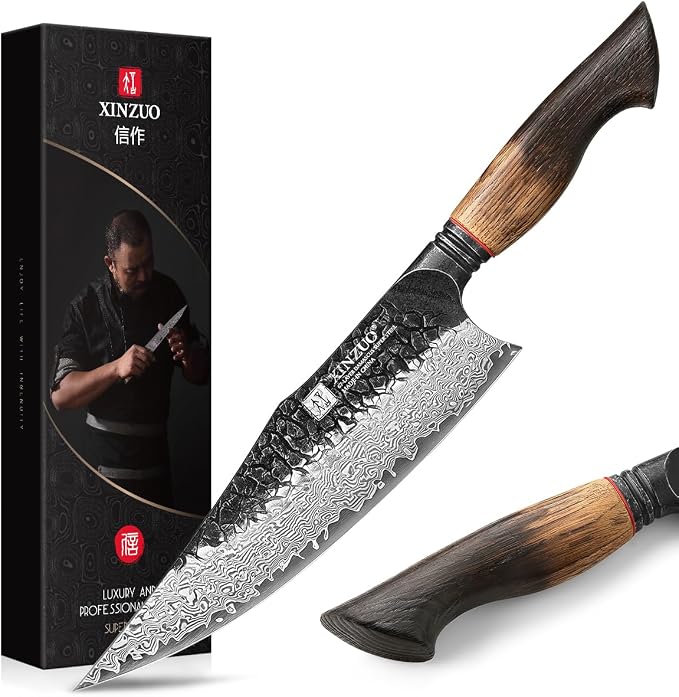
XINZUO 21.9 cm Japanese-style Damascus gyuto
A cook who values reach and already has space for a longer gyuto.
21.9 cm blade · 67 layers stated · wood and G10 accent
This is the longest single blade on the page. Extra length gives a continuous slicing stroke across larger ingredients, provided your board is large enough. The burnt-wood handle with red G10 accent is also visually distinct from the black synthetic handles elsewhere.
Before buying: Longer is not automatically better. You need the board and storage space, and the supplied title does not identify the edge steel. The words “razor sharp” are a seller claim, not a measurement.
Check the live listing ↗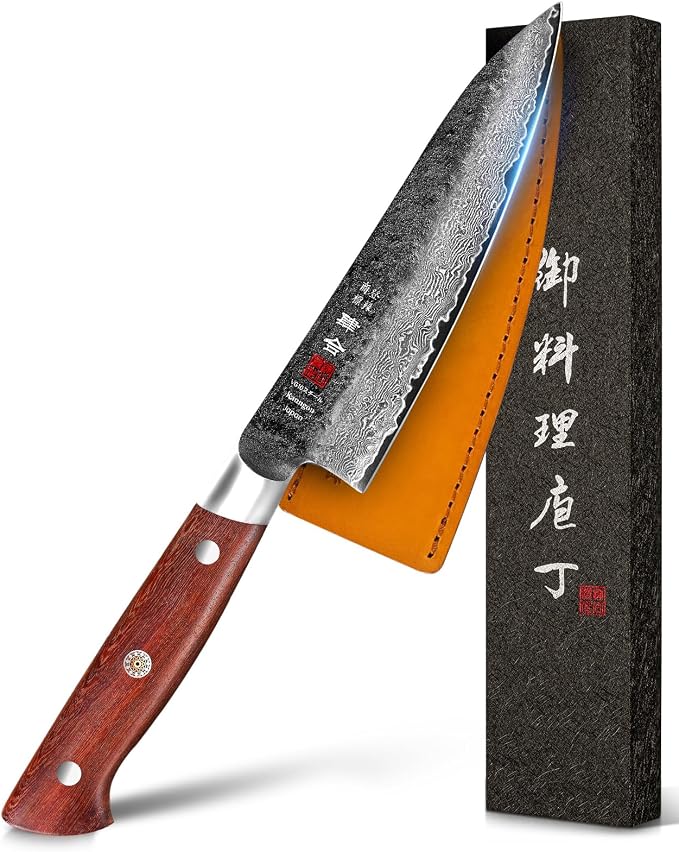
13.5 cm VG10 Damascus Japanese petty knife
Someone who already owns a chef knife and wants a more agile second blade.
13.5 cm blade · VG10 stated · red sandalwood handle
Small jobs deserve a blade you can control. This petty format suits trimming, citrus, garlic and small produce when a full-size chef knife feels cumbersome. Its supplied title names VG10, a full-tang red sandalwood handle and a gift box.
Before buying: It is a partner for a main knife, not the only blade most kitchens need. Wood handle care and the precise edge construction are worth checking before gifting it.
Check the live listing ↗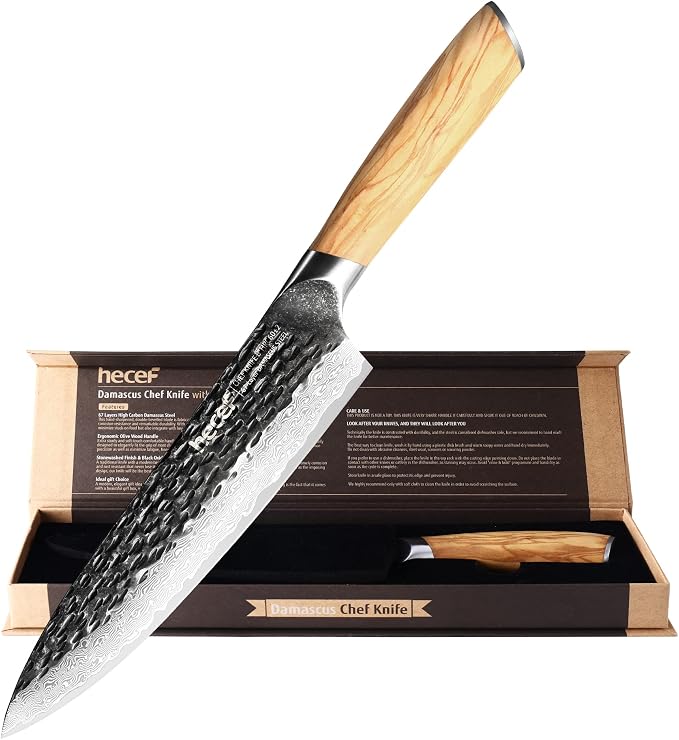
hecef 8-inch Damascus chef knife with olive wood
A buyer who values wood grain and gift presentation in a general kitchen knife.
8-inch blade · olive-wood handle · edge core not stated
If the handle is part of the pleasure of cooking, this hecef pairs a full-size chef profile with olive wood and a gift box in the supplied listing. It is a useful side-by-side comparison with the G10-handled PAUDIN: similar broad kitchen job, different grip material and disclosed steel information.
Before buying: The title does not provide a precise cutting-core grade. Confirm wood-care needs and check the current seller, total delivered price and exact pictured variant.
Check the live listing ↗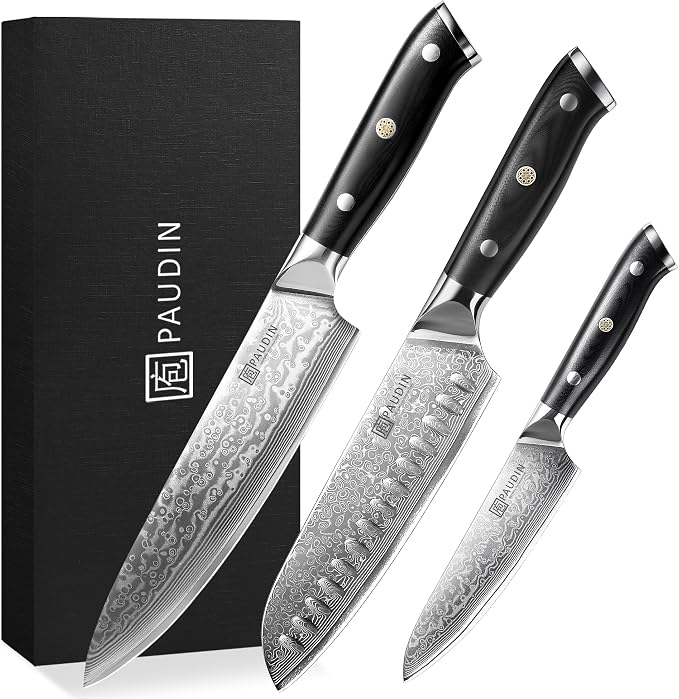
PAUDIN 3-piece Damascus knife set
Someone starting from scratch who has confirmed that all three blades serve separate purposes.
3 pieces · Damascus stated · exact blades to confirm
A set may make sense when you are filling an empty drawer, but only if the three knives solve distinct jobs. This PAUDIN listing is the compact-set option here. Its supplied short title does not specify all three blade shapes, lengths, handles or edge steels.
Before buying: Do not multiply an appealing single-knife story across three blades without checking each one. Compare the live contents against the chef, vegetable and small-task roles in this guide.
Check the live listing ↗Where does a bread knife fit?
Crusty loaves call for a serrated blade. The PAUDIN bread knife supplied for an earlier guide is described as German high-carbon stainless steel, not Damascus, so it is a useful companion rather than one of the Damascus entries above. See the broader knife guide for that comparison.
Know what you are paying for.
A named cutting core, an edge you can maintain and a blade suited to the job make a stronger buying case than a layer count alone.
What does Damascus describe?
Modern knives sold as Damascus may use pattern-welded steel or patterned cladding around a separate cutting core. Some surfaces may carry a decorative pattern without being layered in the way you expect. You cannot prove the construction from a product photo alone. A materials study of modern pattern-welded blades explains carbon diffusion between layers and the role of etching contrast. It is research on blade construction, not a test of any retail knife in this guide. See our Damascus knife explainer and real versus fake guide for the questions to put to a seller.
What do VG10 and AUS-10 tell you?
The PAUDIN chef and petty titles name VG10. Takefu Special Steel explains the VG10 alloy and its chromium, molybdenum, cobalt and vanadium content. The santoku title names an AUS-10 core; Aichi Steel describes the grade’s carbon, vanadium and molybdenum additions. Those sources describe steel grades, not proof of the steel inside these particular products. The MITSUMOTO chef title names VG-Pro; that name alone does not identify the precise alloy or establish that it is VG10.
Does 67 layers mean a sharper blade?
No. A layer count is a construction claim. Cutting also depends on the edge geometry, heat treatment, blade thickness behind the edge, the sharpening job and how you use the knife. We have no verified test readings for the eight listings. A BESS test, described in Edge On Up’s measurement instructions, records force needed to sever standard test media. A lower result means a sharper tested edge at that moment, but it does not settle how the knife will feel through a carrot after months of use.
Edge steel
Ask what reaches the cutting edge, not simply what the surface looks like.
Blade shape
Match the knife to food, board space and the motion you use most.
Grip and upkeep
Choose a handle you can hold securely and care for as the maker recommends.
What changes for an Australian buyer?
Currency is only the first check. Seller identity, delivery, returns and exact product design also matter.
Know who is selling
An online marketplace can host several sellers for similar-looking products. Compare the current seller, dispatch location, delivery window, total in Australian dollars and written return instructions. The ACCC’s online shopping guidance explains that consumer guarantee rights on a marketplace generally apply against the seller you buy from. It also notes that obtaining a remedy from an overseas business can be difficult in practice.
Keep the product description
Save a copy of the listing’s steel specification, included items and order confirmation. If a knife arrives different from its advertised core, handle or blade length, you have a record of what you were told at purchase. Seller details, prices and shipping terms may change after this guide is published.
Import the actual design
The Damascus pattern itself does not decide import status. The Australian Border Force lists knife designs that are restricted or prohibited. Check the current federal guidance and relevant state or territory rules for the item you are ordering, especially if a marketplace seller dispatches from overseas.
Care after it arrives
Wash by hand and dry promptly, especially around a wood handle. Store the blade so its edge will not strike loose cutlery, use a suitable board and sharpen according to the manufacturer’s instructions. Our care guide and sharpening guide take you further.
Already know the shape you want?
Use the focused guides for Damascus chef knives, Japanese-style kitchen knives, knife sets and budget buying. Each solves a narrower choice than this Australian overview.
Common questions, plainly answered.
Which Damascus knife should an Australian home cook buy first?
Begin with a manageable general-purpose chef knife around 20 cm or an 18 cm santoku if you work on a smaller board. Confirm the edge steel and handle before comparing sellers. The PAUDIN VG10 chef, MITSUMOTO 20 cm chef and AUS-10 santoku are useful starting comparisons from the supplied list.
Are these knives made in Australia?
The supplied product titles and images do not verify Australian manufacture for these listings. Check the current product page or ask the maker if country of manufacture matters to you.
Is a Japanese-style knife necessarily made in Japan?
No. Gyuto, nakiri, santoku and petty describe blade styles. VG10 and AUS-10 are steel-grade names. None alone proves where the finished knife was manufactured.
Can I buy a Damascus knife from an overseas seller?
The rules depend on the specific design. Check current Australian Border Force guidance and any state or territory requirements before ordering. Review the seller and delivery details as well.
Is a 67-layer Damascus knife automatically better?
No. The layer count describes a claimed construction. The steel at the edge, heat treatment, blade geometry, sharpening and how you use the knife matter more to the cutting experience.
Should I buy one knife or a set?
Start with one useful main knife if your kitchen already has basic tools. Consider a set if each included blade fills a separate job you actually do. Check the contents of the PAUDIN three-piece listing before deciding.
Are the products ranked by measured sharpness or hands-on testing?
No. These are fit-by-task suggestions based on the supplied product titles and images, plus linked research on steel and Australian buying rules. No invented test score, rating or live price has been added.
Editorial method: Product listings, photographs and Amazon destinations were supplied for this guide. We grouped them by task and stated where edge steel or construction was not supplied. No product has been bought or tested for this page. We have not assigned performance scores, measured sharpness, live prices or owner ratings.
- Australian purchases: ACCC, buying online and Australian Border Force, restricted designs.
- Steel grades: Takefu Special Steel, VG10; Aichi Steel, AUS-10.
- Metallurgy: Verhoeven and Clark on modern pattern-welded Damascus blades.
- Sharpness: Edge On Up PT50 measurement instructions.